Recognizing the Working Class in Colorado
Working conditions for laborers during the Industrial Revolution were brutal the world over, including the United States and Colorado. Organizers campaigned for a “day off” to give the laborers a break from the ordeal of long, often dangerous workdays. Consequently, in 1882 the first Labor Day Parade took place in New York City. In 1887, Colorado was the second state after Oregon to officially adopt recognition of Labor Day. President Grover Cleveland declared the first Monday in September to be a national holiday in 1894; Labor Day was born.
Colorado was home to many industries around the turn of the last century. Hard-rock and coal mining were major industries, along with steel mills and other associated manufacturing concerns. The work was difficult and dangerous, so a day off to walk in a parade and enjoy a picnic with the family was more than welcome.
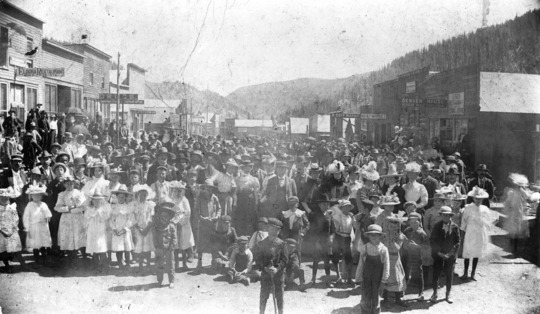
Labor Day celebration in Boulder County mountain town of Eldora, 1900. Photo Courtesy of Denver Public Library, digital collection x-8132.
The turnout for such events was impressive. A Denver Labor Day parade in 1903 featured over 7,000 participants and another held at Lakeside Amusement Park hosted 40,000 revelers. One year in Golden, Labor Day festivities included a “fat man only” race in which contestants chased a greased pig. In 1892, a fun time on Labor Day in Lafayette featured a special race for horses called pacers that pulled sulkies (lightweight two-wheeled racing vehicles).
Our neighbor Louisville still holds a wonderful Labor Day Parade and other activities. Turnout for their event has been estimated at 25,000 people. To you all we wish a restful and relaxing Labor Day 2026 as we stop and acknowledge the vital role played by the working class in American history.
Commission News
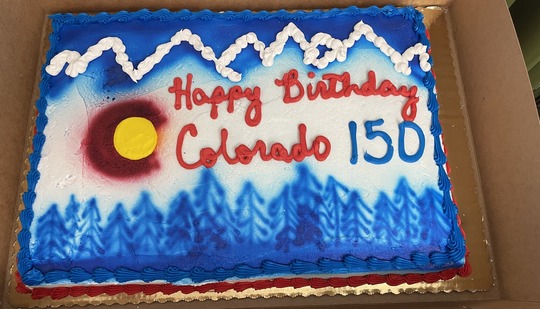
The Superior Historical Commission enjoyed hosting a 150th birthday party for the state of Colorado on Aug. 1, our most recent museum open day. Visitors to the Grasso Park Interim Museum were treated to a piece of birthday cake and musical entertainment by the Superior Ukulele Ensemble. Guests also toured the Grasso and Asti Park museums.
The Commission sends out a hearty thank you to some of our recent donors for their contributions to our growing collection of artifacts:
- David and Carol Claycomb for their unusual item, a scale for weighing babies.
- Twila and Stan Pap for vintage irons and a child’s bowling game called Skittles.
- Bob Gabriella for mining equipment, including squibs (a type of fuse) and empty powder boxes.
- Karen and Wally Waligorski for straight-edge shaving razors.
Historic Sites Open!
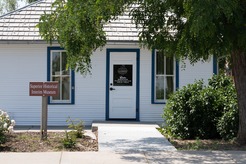
We invite you to visit our two museums and the historic Superior Cemetery on Saturday, Sept. 5:
- Grasso Park Interim Historical Museum, located at 122 E. William St., open 10 a.m. to 2 p.m.
- Asti Park Historical Museum, located at 110 W. Maple St., open 10 a.m. to 2 p.m.
- The Superior Cemetery, located at 2580 Central Park Way, will have docents on site from 9 a.m. to 11 a.m. weather permitting.
|
Did you know that:
- In addition to Colorado statehood, other important institutions came into existence in 1876, such as Boulder High School and the University of Colorado?
- One hundred years prior, in 1776, the Dominguez-Escalante Expedition left Santa Fe to explore present-day Colorado, Utah, Arizona and New Mexico? The two friars led their party through much of Southwest Colorado and their names are found on many landforms such as Dominguez Canyon and the Escalante Grand Staircase.
- In Colorado’s earlier days of motoring on gravel roads, a sharp bend in the road from State Bridge to Kremmling overlooking the Colorado River was called “the Devil’s Elbow?”
Written by Larry Dorsey, Susan Stanish and Jennifer Garner.
For more information about the Historical Commission and its activities, contact Commission Liaison Jennifer “JG” Garner at 303-499-3675, ext. 167, Commission Co-Chair Larry Dorsey at 303-499-1969, or just click the following “Historical Commission Info” button.